
Kategorie: ‘Courses’
Bridge Course Databases
A blended learning bridge course for master’s students in Data Science, Computational Social Science, and related programs.
Research Focus Class: Industrial Applications for LLM-driven Agentic Systems
In this Research Focus Class (RFC), we would like to provide an environment for students to work on developing their own research ideas. With a guidance from research assistants, we will ask you to design and implement these ideas independently. Results of such classes may lead to identifying a Master’s thesis topic or publications in scientific venues. This class offers students the opportunity to gain hands-on experience through interactive and practical research in an innovative setting.
If you are interested in participating in this course, please send us an email (to rfc@dbis.rwth-aachen.de) with a brief description of your motivation for taking this course. We also encourage you to send us your CV and the transcript of records.
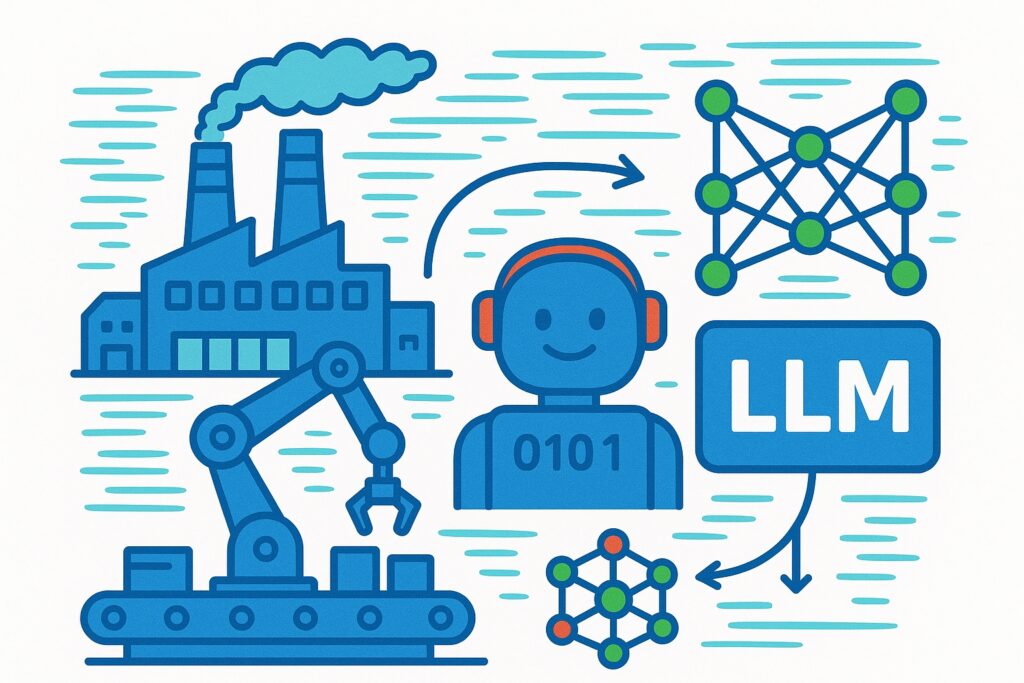
Image generated with AI.
Knowledge Graphs
Knowledge Graphs represent knowledge as a network of entities and their relationships and form the basis of many modern data-driven applications. As part of the W3C Semantic Web initiative, standards and technologies have been developed for machine-readable exchange of data, information and knowledge on the Web, which to this day provide the technical foundation of open Knowledge Graphs. These standards and technologies are increasingly being used in applications and have already led to a number of exciting projects (e.g. DBpedia, Wikidata, semantic wikis, or commercial applications such as schema.org, OpenCalais, or Google’s Knowledge Graph). Increasingly, Knowledge Graphs also serve as a foundation for generative AI: they supply large language models with reliable, structured factual knowledge and thus enable traceable answers. Approaches such as graph-based retrieval-augmented generation (GraphRAG) combine the expressive power of language models with the precision and verifiability of symbolic knowledge representation. The module provides a theoretically grounded and practically oriented introduction to this area. The topics discussed within the lecture include: history of the Web, Semantic Web and Knowledge Graphs; RDF syntax and data model; RDF Schema and formal semantics of RDF(S); ontologies in OWL and formal semantics of OWL; graph and RDF databases, triple and knowledge stores, query languages; Linked Data Web and Knowledge Graph applications.
Data Stream Management and Analysis
In many fields today data is produced continuously, potentially unbounded, and at high rates, what is termed as a data stream. Applications in smart manufacturing, aerospace, particle physics, or stock exchange trading have a high demand to handle and analyze the massive data streams created. Due to their challenging characteristics specific technologies and methods for data streams management and analysis have been developed.
Intelligent Data Management with Generative AI
Generative AI unlocks new potentials supporting tasks in many fields – including data management. It can significantly enhance data management by automating and improving tasks across the data lifecycle. In research data management, it supports metadata creation, documentation, and data curation. For database modeling, it enables schema generation from natural language, query formulation, and schema evolution. In data integration, it assists with semantic mapping and knowledge graph construction. It also can contribute to data quality and governance through supporting anomaly detection and policy drafting and may enhance data ecosystems by aiding cataloging and data exchange. However, the integration of generative AI into data management also presents challenges—ranging from resource efficiency and result quality to issues like bias, hallucination, and data privacy. In this seminar, you will explore a specific subtopic within this field, deepening your understanding while developing your academic writing and presentation skills.
Knowledge Graph Lab
Knowledge Graphs are large graphs used to capture information about the real world in such a way that is is useful for applications. In these data structures, there are all sorts of entities (for example, people, events, places, organizations, etc.). Knowledge Graphs are used by many organizations to represent the information they need for their operations. The most well-known example is Google, where a knowledge graph is used to enrich the search results. Also personal assistants, such as Amazon’s Alexa, Apple’s Siri and Google Now, as well as question answering systems such as IBM Watson, make use of knowledge graphs to provide information to their users.
Besides these, also other information graphs, are in use by large organizations to improve or personalize their services. Examples include the Facebook graph, the Amazon product graph, and the Thompson Reuters Knowledge Graph.
Opensource Knowledge Graphs such as Wikidata and DBPedia provide universal access to linked entities from a large range of domains.
The graph also contains all sorts of information about these entities (e.g., age, opening hours, …) and relations between them (e.g., “this shop is located in Aachen”). Furthermore, it may contain context information (e.g., the source of some information) and schema information or background knowledge (e.g., “shops have opening hours”).
In this course we will give a basic practical introduction to working with these graphs. We plan to cover the following in the course:
- Graph representation of data
- Knowledge Graph basics
- Knowledge Graph creation and maintainance tasks: Creation, Hosting, Curation and Deployment
- Use of vocabularies and ontologies as schemas for graphs
- Searching information in knowledge graphs
- Information extraction into knowledge graphs
- Data mining techniques for knowledge graphs
- Knowledge graph completion (predicting links, finding anomalies)
- Data governance aspects, e.g., data quality
- Architectures for knowledge graphs (e.g., data lakes, central vs. decentral storage, knowledge graphs on top of relational or NoSQL databases)
- GraphRAG
- Application of AI-enhancements along the KG-pipeline
Empathic Computing Lab
Empathic computing investigates how technology can support collaboration, shared understanding and human-centered interaction. In this lab, student teams design and develop their own projects using immersive and pervasive media—ranging from XR headsets and smartphones to tablets, laptops, and wearable devices. Projects may leverage open standards like WebXR, or use engines such as Unity, depending on the goals and platforms chosen. The focus is on creating meaningful, responsive experiences through thoughtful interaction design and emerging technologies.
Mixed Reality Lab
Mixed Reality combines virtual, augmented, and extended reality into a continuum of spatial computing experiences on devices such as the Meta Quest 3, Microsoft HoloLens 2, HTC Vive Pro, and Android smartphones. In this practical Bachelor lab, students in teams of 3-4 design and implement their own mixed reality application using modern toolchains (e.g., Unity and OpenXR). Participants learn key MR interaction patterns, input and UX design, and deployment to target devices. Registration for the lab is handled via SuPra; late registrants may join a waiting list.
Data Ecosystems Lab
Modern web applications centralize data, creating isolated silos, whereas decentralized data ecosystems enable users to store and manage their own data, granting true data sovereignty. In this lab, small teams will tackle distinct challenges, such as ingesting wearable sensor streams, processing fitness metrics, or sharing activity logs with friends, to build components of a fully decentralized fitness‑tracking app that leverages the Solid framework for secure, user‑owned data exchange.
Empathic Computing
The lecture provides a systematic overview of the field of empathic computing at the interface of human-computer interaction, extended reality, affective computing, and virtual worlds. The focus is on how interactive systems can be designed to enable people to better understand and empathize with the perspectives, experiences, thought processes, and emotions of others, especially in distributed and immersive collaboration scenarios.